Wild orchid…


11th June 2023
We have had 3 types of iris blooming in the garden the last week.
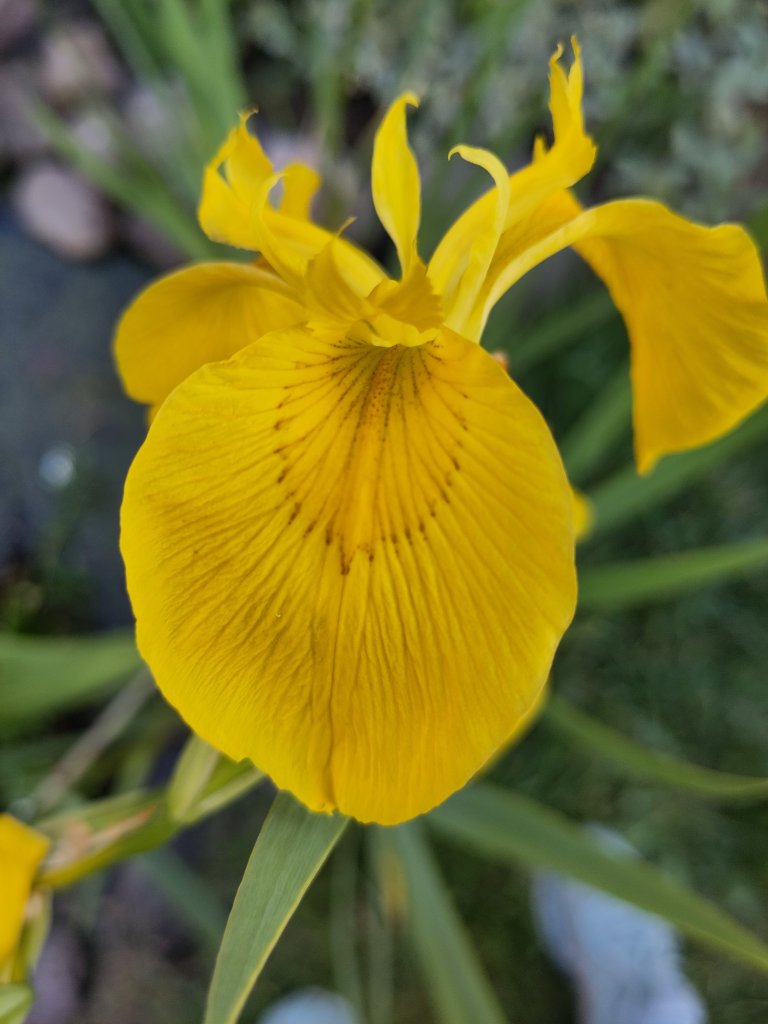
It started with these European yellow flag irises (Iris pseudacorus). We have these in the pond, and in previous years dragon fly larvae (surely one of the ugliest babies in the world? Thank god they’re not bigger!) have used their flowering stalks for metamorphosis from their aquatic to aerial phase.
The flag iris loves wet areas and is known to be a bit invasive in some water courses, but in our pond it’s perfect!


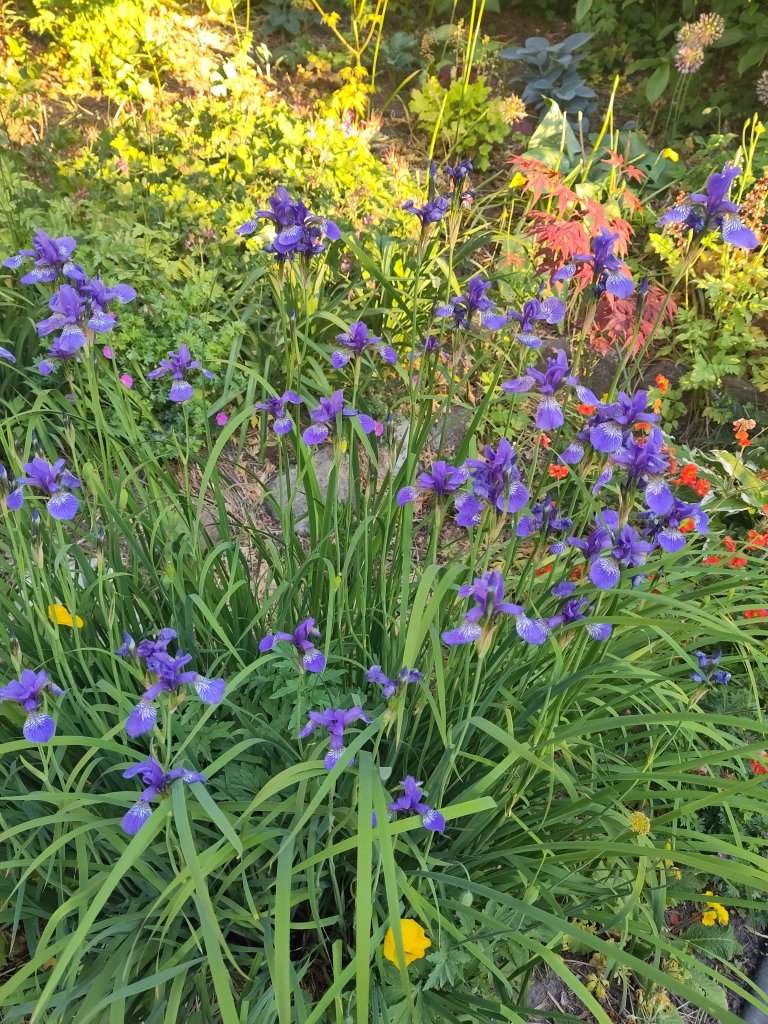
The second group: iris sibirica came out about 4 days ago. This clump has been here about 4 years and every year it gets bigger. Unfortunately they tend to grow outwards so the middle gets emptier, but helpfully one of our Welsh poppies has talen up residence there and it really works. One of those happy accidents that occur when you’re not tooo tidy in the garden.

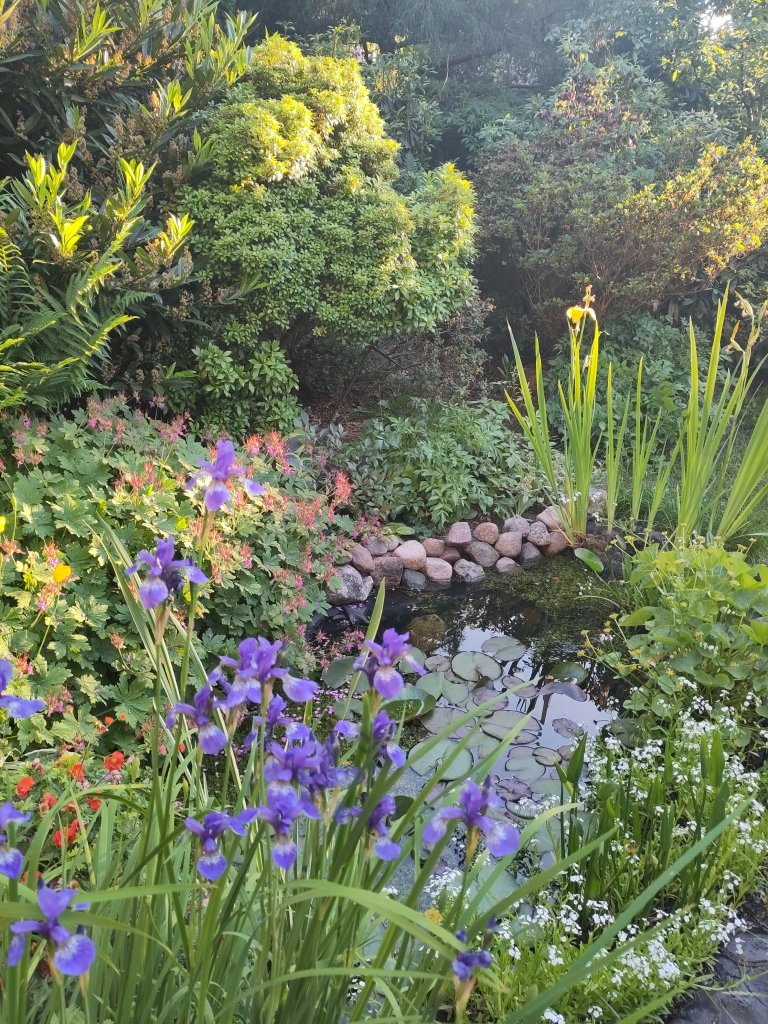
I love that I can see them while washing up from the kitchen window. The light shining through the flag iris leaves is also incredible on these long summer evenings.
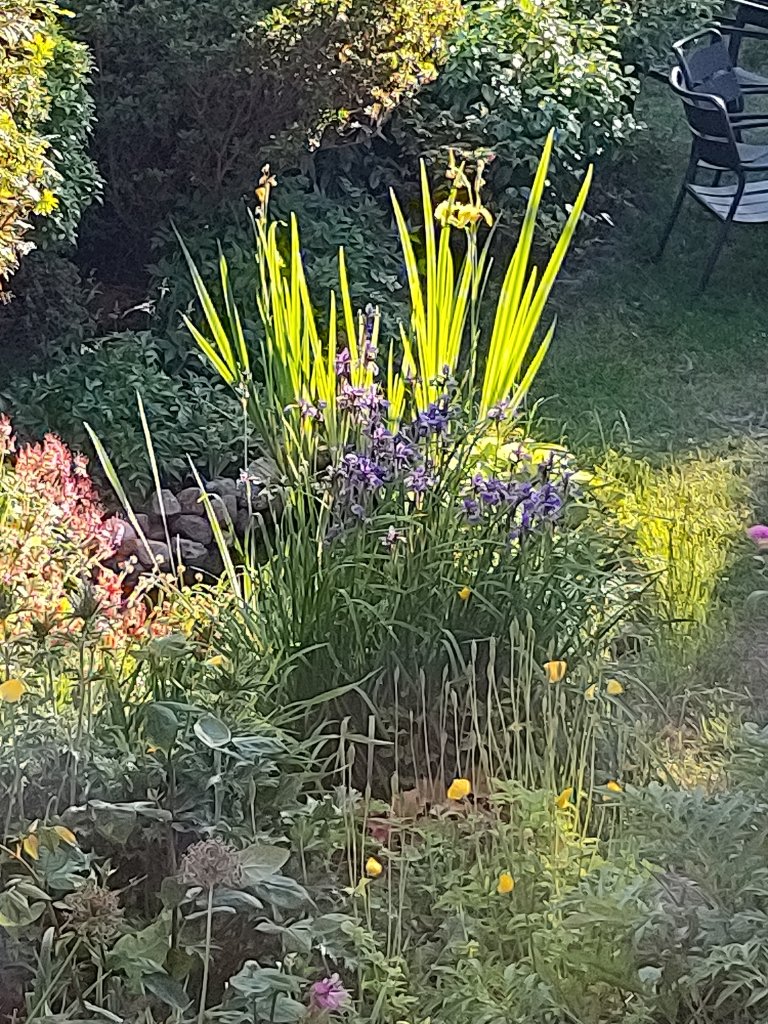
A little washed out because of the digital zoom, but you get the idea…
Our third iris is maybe a Turkish iris (iris orientalis) but I’m actually not sure. It’s the only one to have come up out of several bulbs that were planted last year as a tribute to a much loved (and sadly short-lived) russian white hamster. It’s lasted 3 or 4 days so far and is exquisite with pure white petals and a splash of yellow.
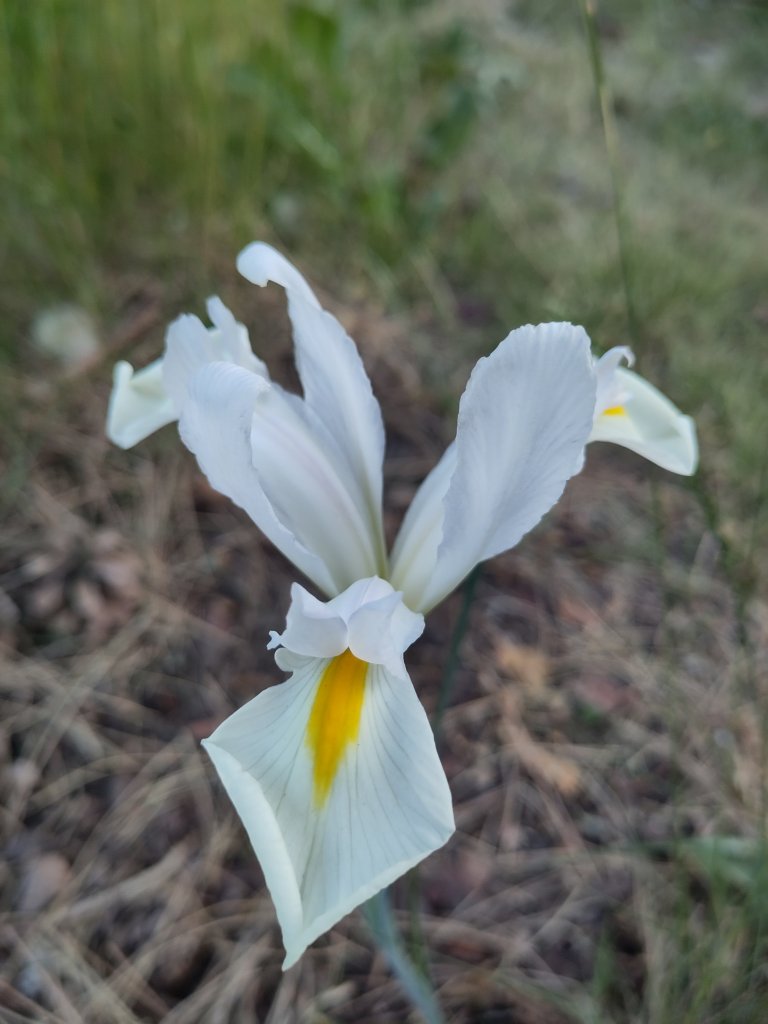

I hope it lasts and multiplies like it’s blue cousins.
We have been catching up on the RHS Chelsea show this week and there were some stunning irises on display there. I suspect that some new varieties may soon be appearing in our garden.
The range of colours is highly appropriate given that in Greek mythology, Iris is the personification of the rainbow and a messenger of the gods.
There is so much to see and enjoy in the garden at this time of year, but ultimately it’s all about the light.
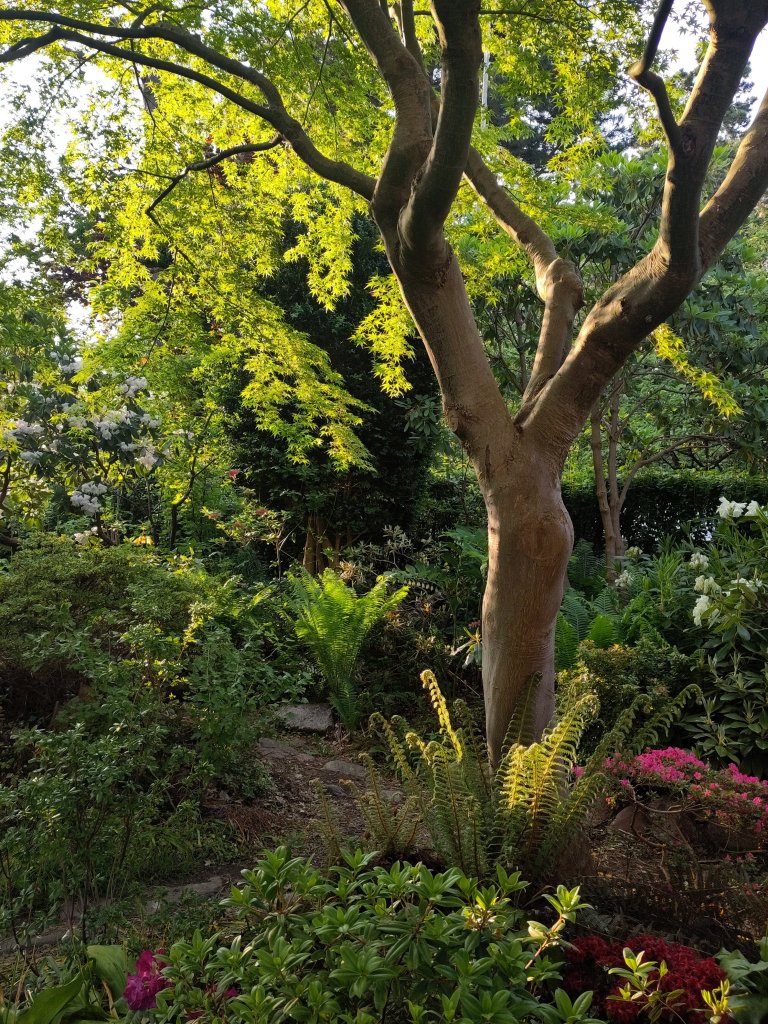
After a far too hectic working week, kicking back and enjoying the light dappled through the Acer, now more or less in full summer livery, with the curling fronds of the ferns, the scent of the white Rhododendron, the blackbirds singing..
A true moment of inner peace.
22nd May 2023
I’ve always liked the lilac family. Firstly for nostalgia as it’s one of the plants I remember from childhood, and then one of the first houses I lived in as an adult had a huge and beautiful lilac in the back garden. It seemed almost immune to the suckers that generally proliferate from the lilac family.
When we moved to this house, we knew about these two tall lilacs in the front hedge..


We were also rather surprised to discover that this slightly nondescript shrub turned out to be a beautiful pink syringa. It has small but definitely lilac shaped leaves and is smothered in pink blossom at this time of year. Unlike other syringa it lasts for weeks and the flowers will continue intermittently all the way through summer.
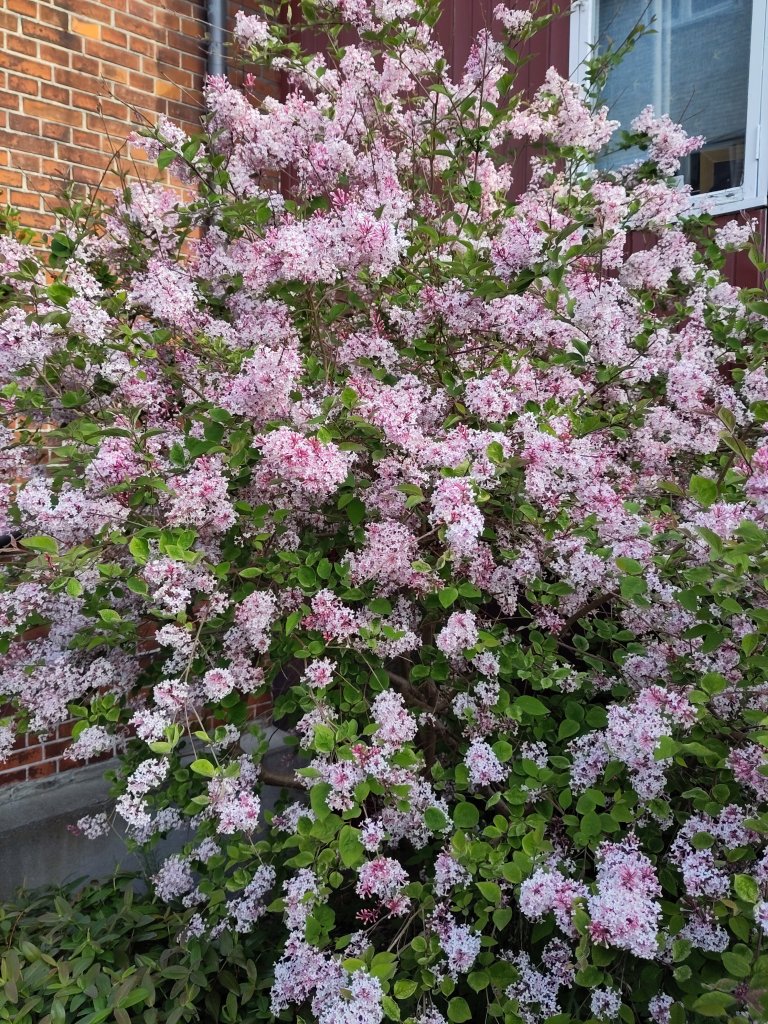
I really like the small leaves on the pubescens lilac, as well as the small flowers which start to appear very early in the year during mild spells. But this is definitely my favourite time. It has the classic lilac scent and also has a tendency to sucker like the common lilac, syringa vulgaris, so it needs keeping under control with an occasional prune. But really worthwhile in the garden.
Finally, we added a lilac in a pot a few years ago.

There are multiple other varieties in the neighbourhood, I think my favourites are the very dark purples but I have a weakness for white too. If we do end up planting a new one, I think it will be one of these.
Finally, I recently learned a trick about how to keep lilac looking lovely for at least a few days as a cut flower as it normally withers very quickly off the tree.
So, firstly, cut in the early morning and choose flowers that are mostly already out. Soak in a fresh bucket of water for at least an hour after cutting. Remove all leaves and cut the end off the stem and then cut it vertically along the stem for 3 to 5cm. You can remove a small end of the stem every day if necessary. They should last at least 3 days and maybe even 5 with this treatment.
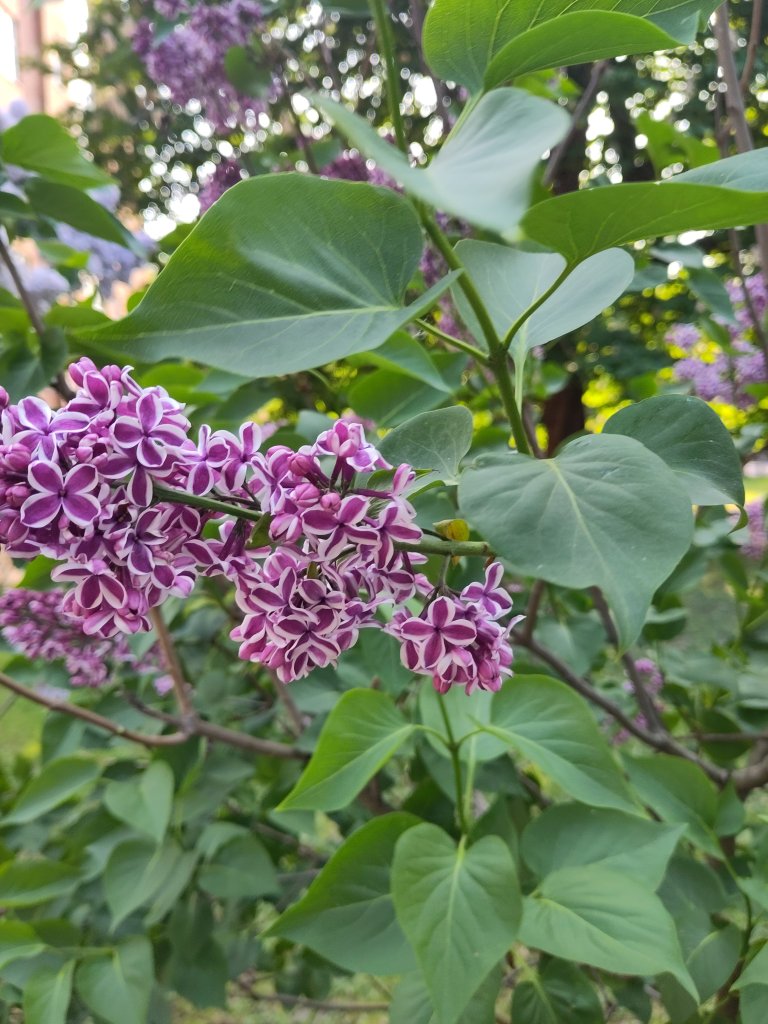
UPDATE: spotted this cultivar, “sensation” in the neighbourhood, and it’s indeed well named..
I’m now trying to work out where on earth I can put one…

Our back garden has a very well developed Rhododendron and azalea them. The structure was put in by the previous owners but since then we’ve added quite a few ourselves. That means that May is a month where the back part of the garden reaches peak loveliness.*
So today a guide to the currently flowering Rhodies.
Let’s start with a couple of my favourites, and they’re favourites because of their scent as well as colour.
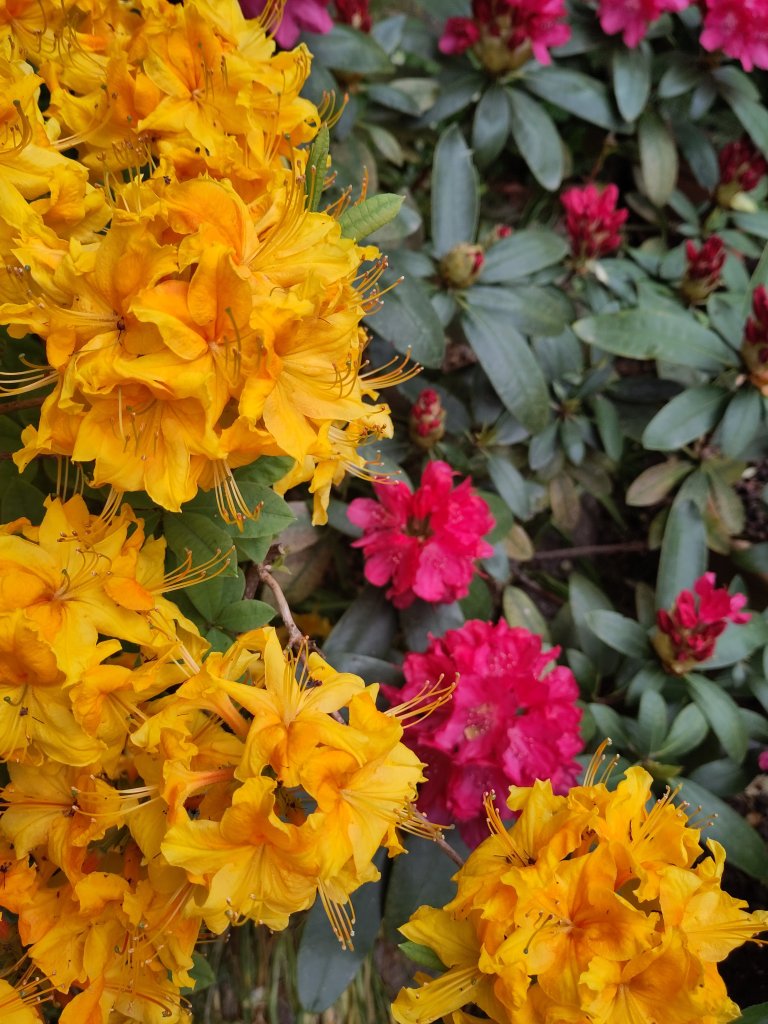
This luteum is now out in full. And has a lily like fragrance

The bright orange contrasts beautifully with the “Astrid” variety next to it, which isn’t scented but has a gorgeous lush colour.


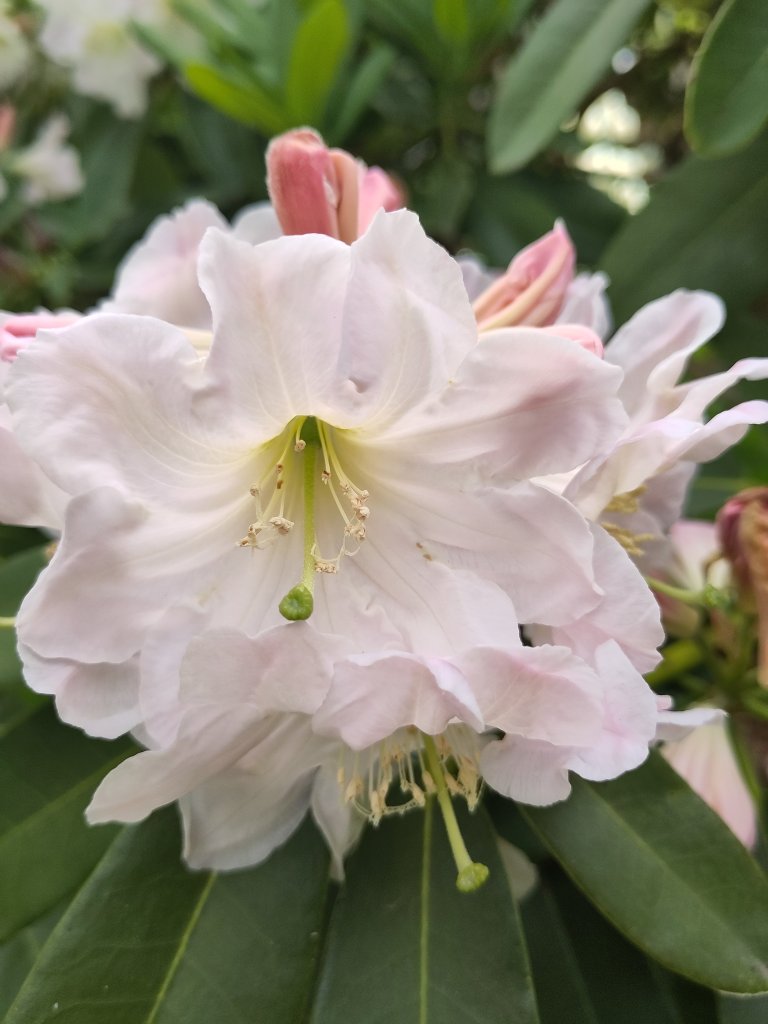
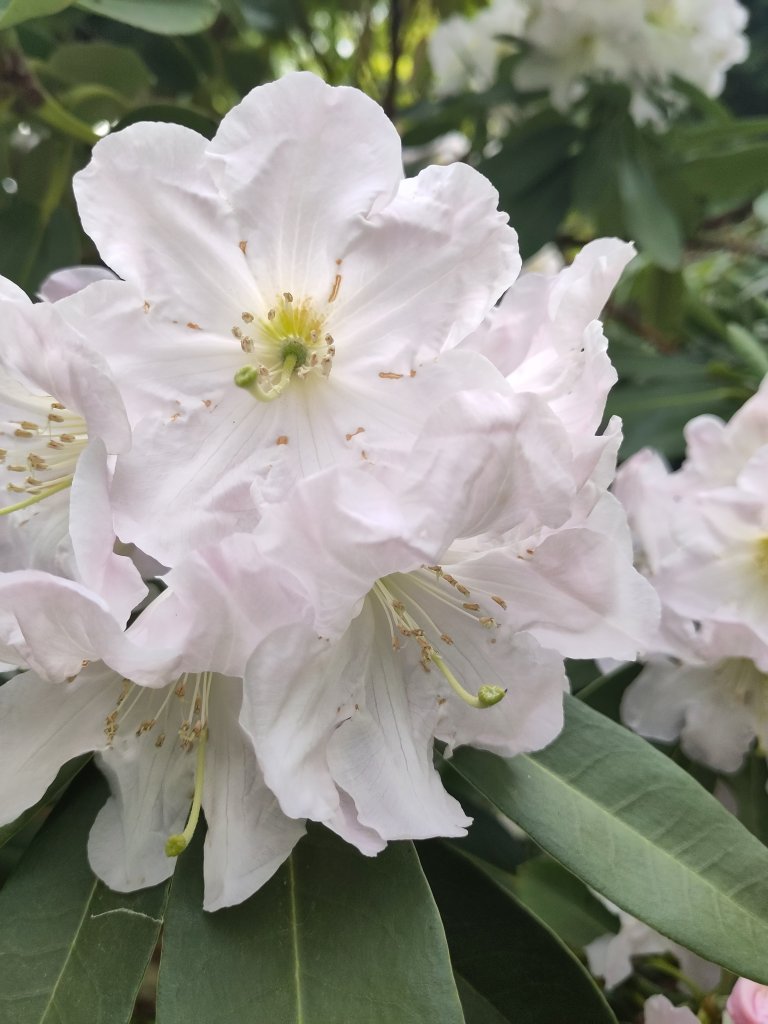
Then we have the favourite I’ve mentioned before. Our wonderful polar bear Rhododendron – the fragrance is wonderful, but look as the silky billowing white flowers that open from pink buds. It’s a good 3m high and laden this year. Fantastic..
It’s neighbour, also a luteum has only one flower this year and I fear it will need to be replaced, but again a beautiful lily scent and I love the delicate petals.

We have many Cunningham’s white in the garden. They are sometimes dismissed as EasyDendrons and you can (and should!) trim them like a hedge, they always spring back and are super reliable. I sometimes think they’re a little boring, but look at those delicate markings on the flower! And the dark green foliage really shows the contrast well. There’s a reason they’re popular.


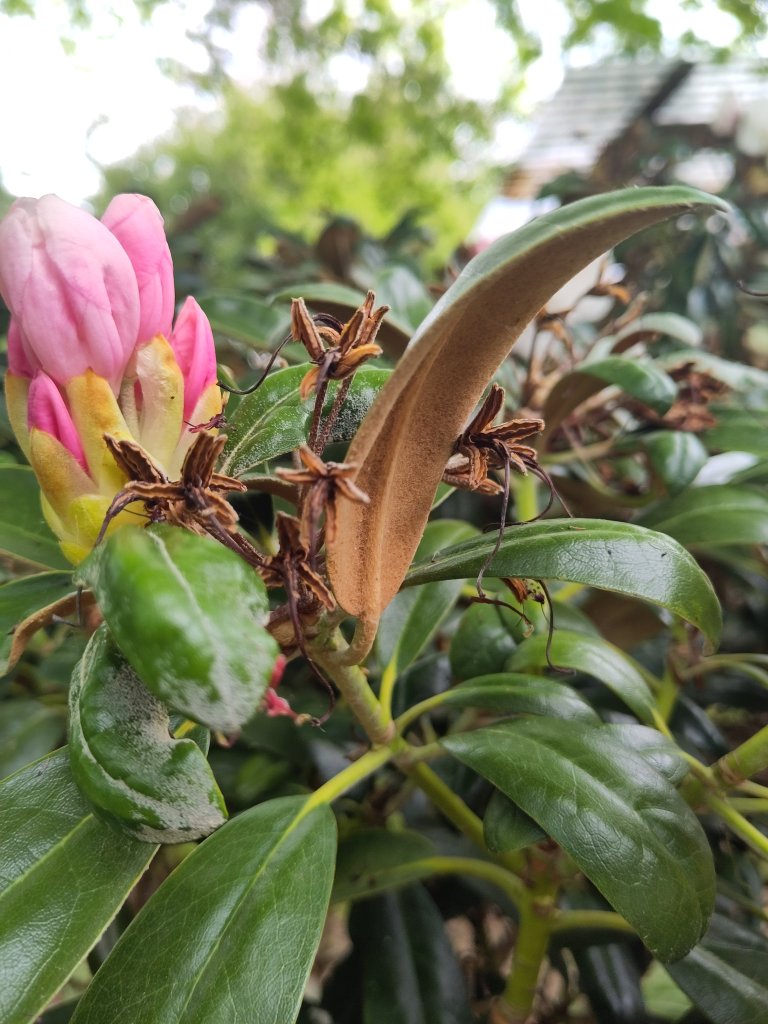
Also white flowered and unscented is this wild form Rhododendron which has very attractive pink buds that open to white cup shaped flowers. The leaves are furry on the underside too. Also a favourite and not very commonly seen.

Helen Moser is another pretty common variety that is also at its peak now. As the flowers age they get very attractive markings inside developing. I assume some kind of landing strip for bees?
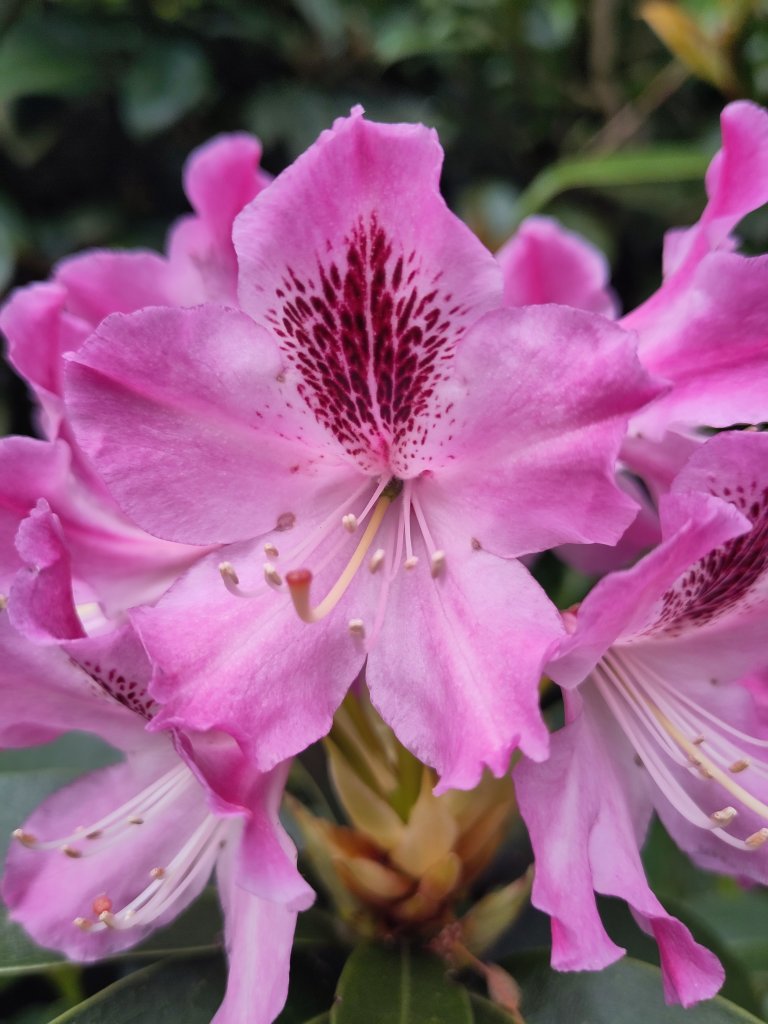

We have several other pink azaleas but I don’t know what varieties they are. This one has very small leaves and builds a low shrub (1.5m high max) with an attractive structure too. No no

The small leaves on this königstein are also very attractive and now it’s covered in beautiful star shaped purple pink flowers.
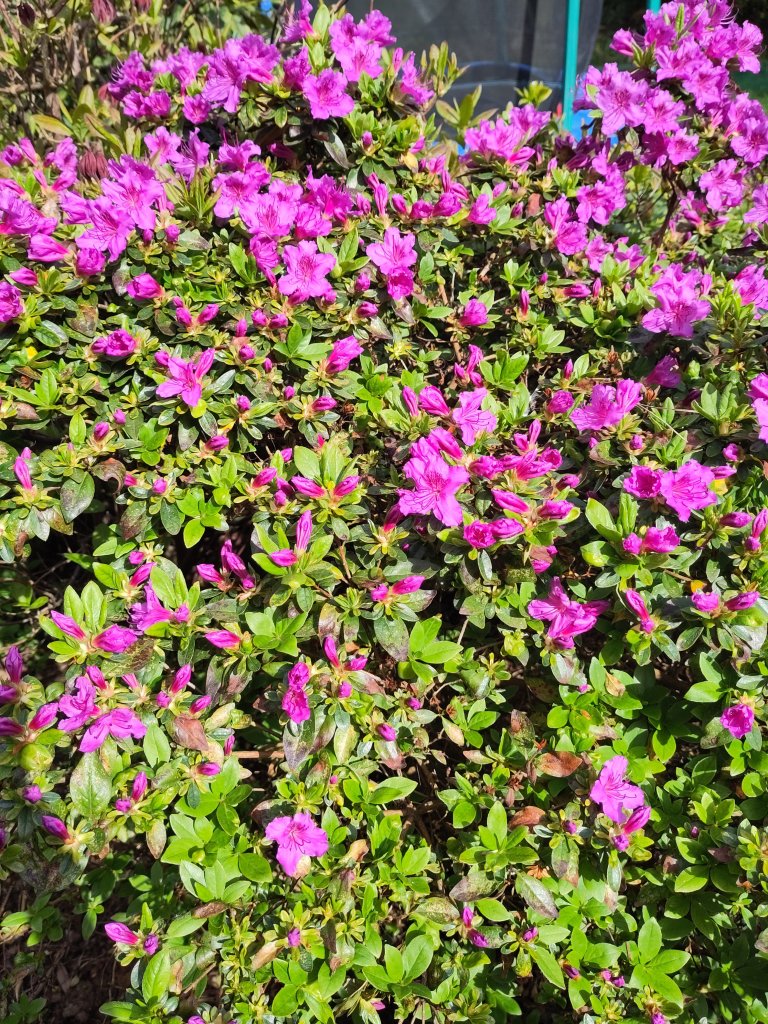

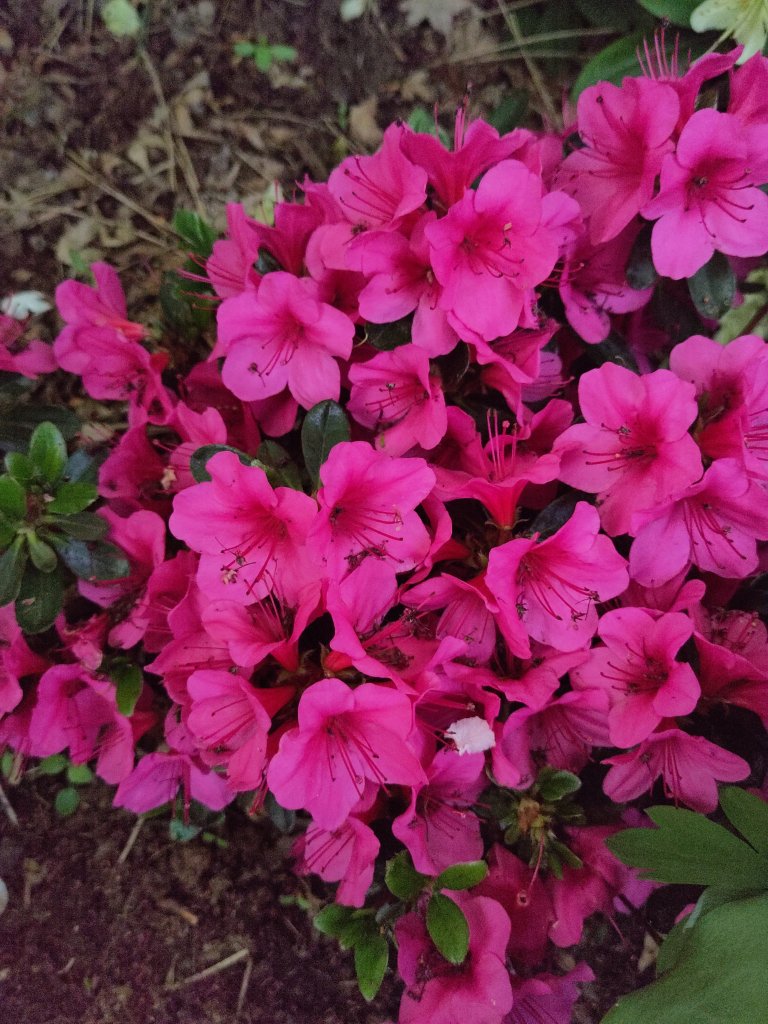
We have a number of very low – less than half a metre high Rhodies that are not really my favourites- I think they’re too low and don’t really add structure, but they’re smothered in flowers at this time of year:

The reds rather clash with the rest of the cool pinks and purples but they’re undeniably bold

This cool yellow was an enormous mound and got cut back hard a few years ago. It’s recovered very well (unlike some of our others), but the flowers are now starting to fade. This is an earlier flowering azalea.

There are several more coming into flower soon, and several that have ended. May is a fantastic month, but there’s so much to see and appreciate it can be a bit overwhelming.
Tomorrow I will cover the lilacs, also getting close to their peak!
*kinda. I think there’s always something beautiful to look at here and that’s sort of the point of this year’s attempt to write a diary.
One of the problems with taking photos of plants is getting the colours right.
This is especially the case with a mobile phone. This blog is supposed to be minimal effort, which means no SLR, no uploads and downloads, no editing.
A lot of the earlier photos were taken with a trusty Samsung S7 – but I upgraded to a Fairphone 4 about a year ago and I’ve been really really impressed with the camera.
I can adjust the colour balance quite finely with the camera app (Note I downloaded a different a new camera app, it’s not the standard google camera app!) and it really pays off with some of the flowers, particularly the blues.
Compare and contrast the standard colour and the one with adjustments in shutter speed, white balance and focus.

This is the Blue danube azalea, a newcomer this year. I wouldn’t call it blue exactly, but we will allow the growers some poetic licence perhaps, because I’ve seen the Danube many times, and that’s not blue either.
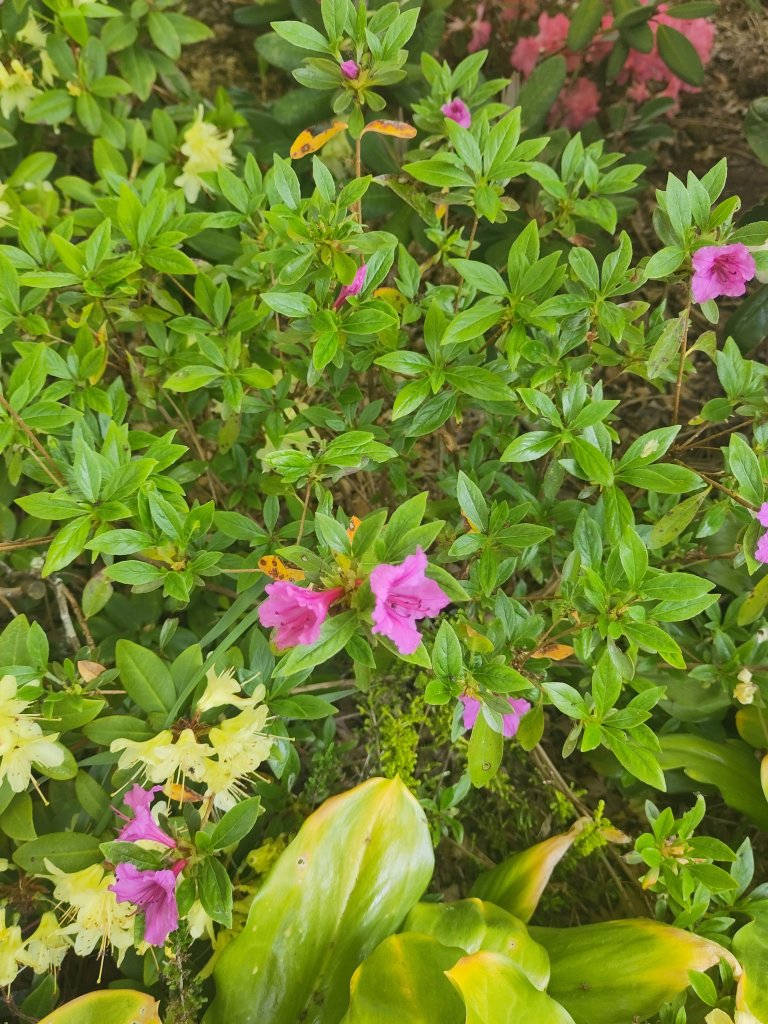
Other things starting to come alive in the garden right now are this wild form Rhododendron with delightful leaves and thes beautiful white owners that open from a pink bud
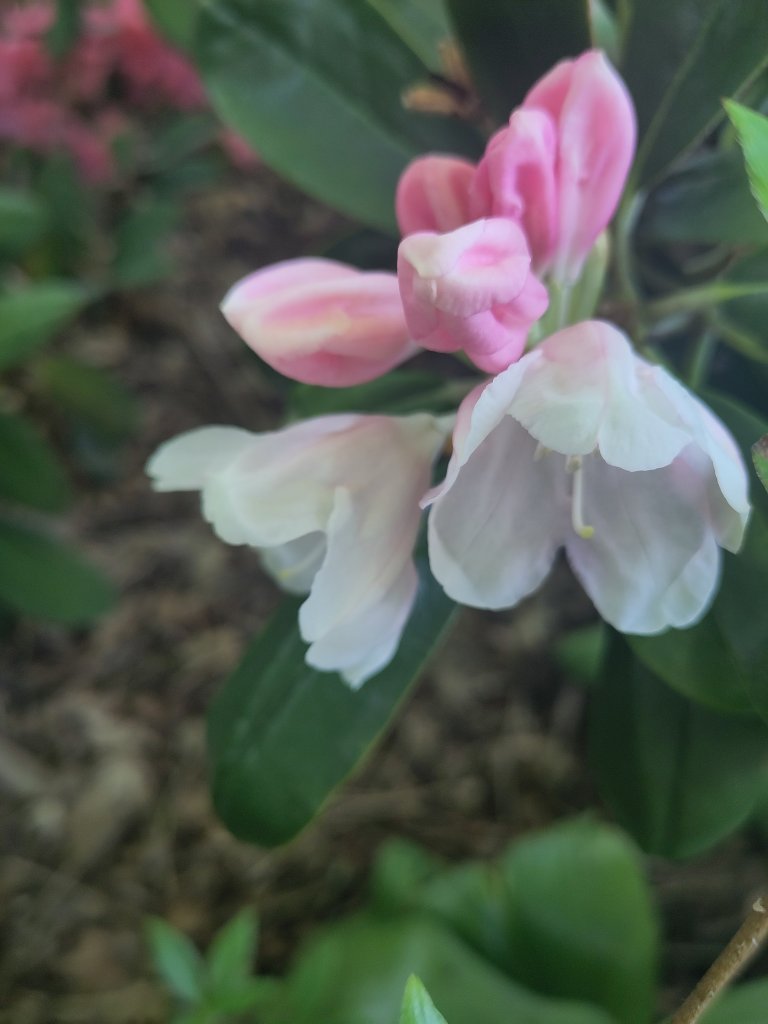
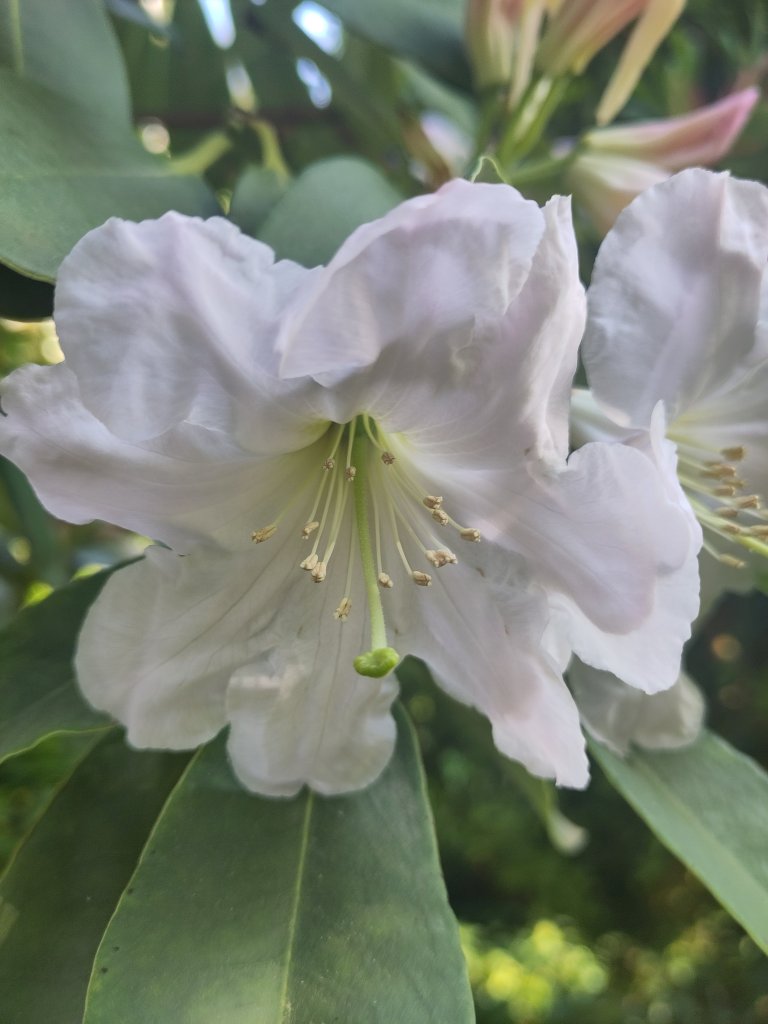
Probably my favourite Rhododendron of all, polar bear. A silky rippling bloom and a mouth-water fragrance that soaks the whole garden on a tall tree. Just perfect.
Garden on a cool but sunny + still May morning. I’ve identified 8 different bird* species + seen at least 7 individual newts in the pond. Al
The newts were active during a warm spell in April but they disappeared during the cold start of May. I was worried they were dead. But now the males are in full glorious mating colours, the females more subdued and much more tricky to spot.
No toad spawn yet, though we heard a male making the mating call last night.
The azaleas are coming out, tulips just past their peak, marsh marigold in its prime.


One of the glories of the whole garden is our large Acer palmatum. It has thousands of tiny red flowers just before the leaves come out. At this time of year the delicate pale green leaves are so delightful against a blue sky with the sun shining through them. The flowers are gone but the seed heads will start to develop. We quite often get dozens of mini sycamore helicopters in autumn but none of them have germinated yet. I had always preferred the red or variagated varieties but this tree really changed my mind

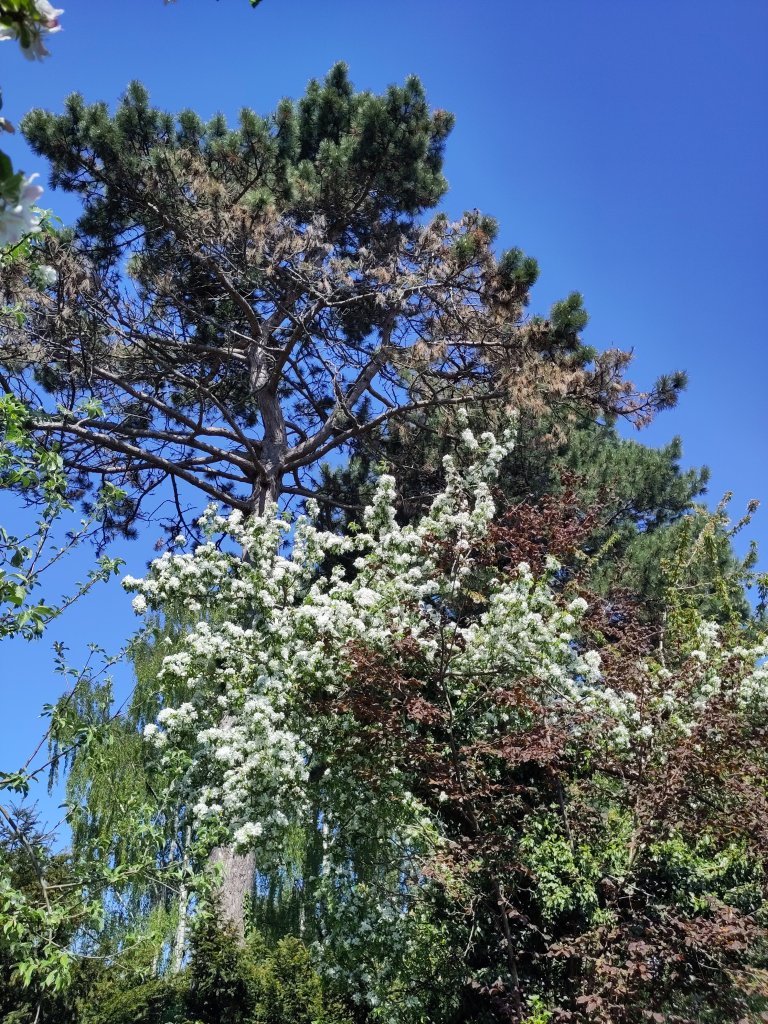
The apple blossom is now at it’s peak too. Somehow it has not quite captured the imagination in the same way as the Japanese flowering cherry, but it absolutely deserves to.


2 years ago I planted up some native(ish) woodland undergrowth plants under the Acer to sort of mimic the tapestry of species you find in Scandinavian forests. We’re not quite there yet, but I was pleased to see how far my Solomon’s seal has come along. A plant I well remember from my childhood.

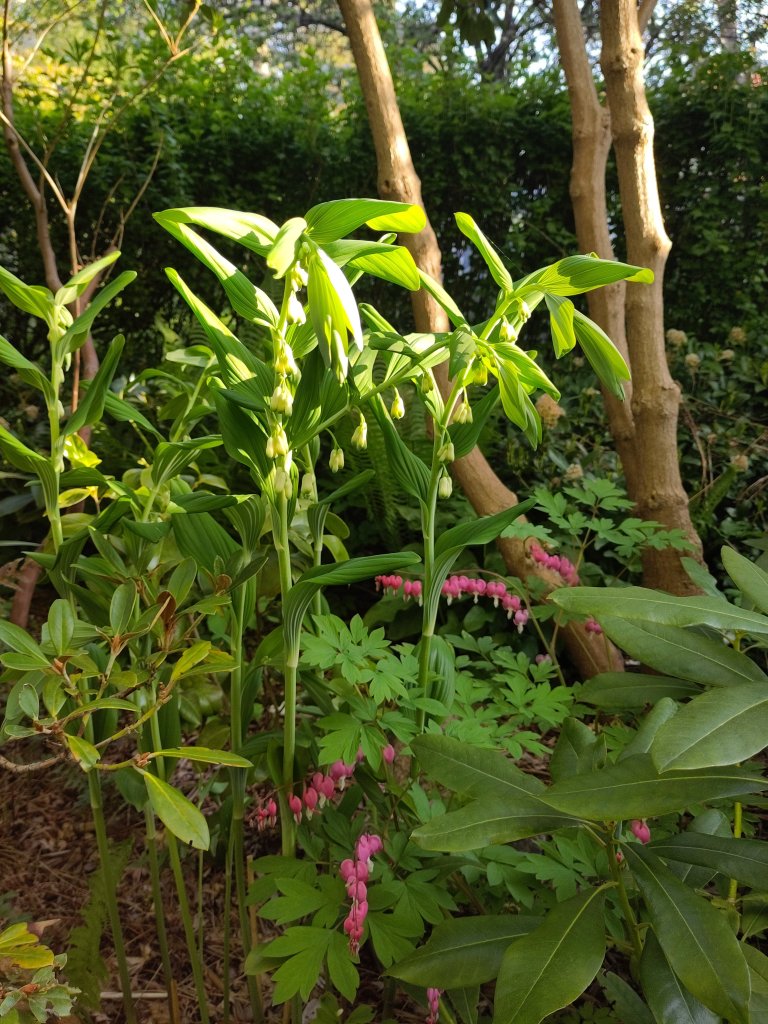
Underneath, the bleeding hearts (Dicentra spectabilis) have also spread and are looking really healthy now. In Danish these are called “lieutenant’s heart”, from the resemblance of the flowers at various stages to swords, champagne bottles and women – all a young lieutenant could desire apparently.
I notice that haven’t posted anything here since May five six years ago.
Goodness how the world has changed in that time. Brexit, Trump, Biden, CoVID19, Ukraine… And yet how little has actually changed in the garden. The birds still sing, the flowers bloom and the garden continues.
Gardening has lots to teach us about living.
The year should start in May, not January. A hopeful time of year with long light days and plants bursting with vitality. I spent an hour standing in the garden this morning watching the pond as the newts dipped up and dived back down, the birds* chirping away. I wandered around poking my nose in flowers appreciating the varied forms of the ferns, and noting the fading glory of the spring bulbs as the blossom on the fruit trees reaches its zenith.
How about a year in the garden on here?
Ready steady, go…

Birds identified with the help of birdnet, (now there’s a use for AI we can all get around), included this morning:

 downbythepond